Hoose Reports from Delaware Bay

This report came via email from author Phillip Hoose who is on Delaware Bay banding shorebirds and hoping to spot B95, the subject of his award-winning book, Moonbird: A Year on the Wind with the Great Survivor B95.

“Two young Quebecois biologists—Yann Rochepault and Christophe Buidin– snapped these photos yesterday morning at Fortescue Beach on the Bay’s Jersey Side.

B95 Christophe Buidin

‘It seems like B95 is continuing his publicity tour!’ said Charles Duncan of the Manomet Center for Conservation Sciences.

I was there yesterday; I missed B95 by about an hour.   He has made four appearances now, on three different beaches.   All who have seen him—five folks in all—comment that he looks great; in good plumage, already getting chunky, and vigorous in feeding.   His breeding plumage is part-way in.   He arrived early this year, as did many birds.

B95 Yann RochepaultFive key crab spawning beaches were completely restored from the work of Sandy—a local coalition of private and public entities raised 1.4 million and purchased 35,000 cubic yards of sand from a local mine.  They trucked it in hundreds of loads and finished spreading it just before the crabs began to spawn in late April.   It worked beautifully:  all five beaches are well used by spawning crabs now.   Theres a feeling of optimism down there this year, despite roadways narrowed by towering heaps of sand, and Katrina-like destruction of beach houses.  B95, who keeps returning no matter what, is a great symbol of hope.”

Let Flood Tide Run

IM PH Penguin 1209“When I know I’ve found a story to tell I let the flood tide run in me for a day or so and just let myself be soaked with love for the idea. In those dawning hours I’m blindly in love with the idea…Then I sleep on it. I try to put it away for a little bit…I am so excitable that I know I need a day. If my idea can survive those stages, I explore it with all I have.” -Phil Hoose

From the fantastic article in Horn Book, “Narrative Nonfiction: Kicking Ass at Last” by ELIZABETH PARTRIDGE.

Band for the Birds

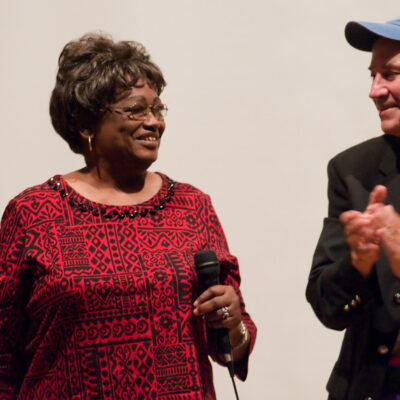
Professor Ernie Bond of Salisbury University declared this combo of authors Olivia Bouler and Phillip Hoose, the “best band to ever play for the birds!” at the Green Earth Book Awards.

Bouler & Hoose at Green Earth Book Awards

Bouler & Hoose at Green Earth Book Awards

Readers and bird lovers should locate a copy of the wonderful conservation title by Olivia Bouler, Olivia’s Birds: Saving the Gulf and follow her on Facebook.

51DMxkLboQL._SX225_Olivia wept when she heard about the oil spill in the Gulf Coast, a place where she spent many vacations with her cousins and grandparents who live in Louisiana and Alabama. Knowing birds were going to suffer during migration and nesting season, she decided to take action. Olivia gave bird drawings to those who donated to wildlife recovery efforts, thus raising $200,000 to date.

Her story has appeared on the Today Show, CBS Evening News, Mobile Press Register, The Guardian (UK), BBC, AOL News, Newsday, USA Today, and Larry King Live. Her children’s book, Olivia’s Birds, was released for the one year anniversary of the oil spill.

Olivia has been named 2010 ASPCA Kid of the Year, Audubon Artist Inspiring Conservation, Disney Friend For Change, Dale Earnhardt Legend of Leadership, and A White House Champion of Change.

Olivia’s Birds: Saving the Gulf and Phillip Hoose’s Moonbird were both honored at the recent Green Earth Book Awards.

Animals Do Their Part

Phil Hoose (Photo by John P. Cleary, Herald Bulletin)

Phil Hoose (Photo by John P. Cleary, Herald Bulletin)

Author talks to elementary students about shorebirds, preserving nature
By Dani Palmer 
The Herald Bulletin

FRANKTON, Ind. — Frankton fifth-grader Hannah Smith had no idea what a red knot was until author Phil Hoose stopped by.

Hoose was at Frankton Elementary School on Thursday morning to talk to the students about shorebirds, along with a few of the animals they encounter and the importance of preserving nature.

The hero of his latest book, “Moonbird,” is a red knot shorebird named B95.

Hoose said he wants the kids to “feel some empathy and respect for them, preserve their habitat for them and to love birds” that actually have “rugged lives.”

“Caring is at the core of all of it,” he said, adding developing a philanthropic nature while young can really make a difference.

Fifth-grader Aden Steigerwalt said he thinks it’s important to be knowledgeable about nature and take care of it.

“Animals do their part, we should do ours,” he said.

Frankton Elementary has worked to raise money for the Nature Conservancy, an organization that works globally to protect ecologically important lands and waters, for 18 years now, raising more than $20,000 for the Adopt-an-Acre program.

Phil Hoose (Photo by John P. Cleary, Herald Bulletin)

Phil Hoose (Photo by John P. Cleary, Herald Bulletin)

Ken Kakasuleff, a fourth-grade teacher who helped get the program started, said students raise money through jar wars, in which each grade collects coins in 5-gallon jugs to build up points. Students can put bills in another grade’s jug to subtract points and the grade that receives the most gets rewarded with a party.

“It generates a lot of enthusiasm and they know it’s for a good cause, what it’s for,” Kakasuleff said.

The school completes jar wars the week of Earth Day or Arbor Day and students study nature as they do it.

Hoose has worked with the Nature Conservancy for 36 years now and was in the area to make some presentations for the organization. He said Frankton is well-known for its conservation efforts and that he was happy to stop by to spread awareness and teach the kids about animals they may not have known exist.

B95 is “bionic.”

Hoose said 55 percent of red knots die in the first year of their lives and the rest live to be about 7 years old. B95 is 20 years old, the oldest of his species ever.

“He’s become world, world famous, this bird is,” Hoose said. “This guy is something special.”

B95 has flown more than 350,000 miles, he said, which equivalents the distance to the moon and nearly halfway back. Red knots fly from the bottom of the world to the top each year, through hazardous weather like hurricanes.

“I think it’s cool for a bird to fly like that,” Steigerwalt said, comparing B95 to a rocket.

Before he left, Hoose donated four of his books to the school’s library, signing each copy for the students.

As for B95, he was last seen May 28, Hoose said, and it’s unknown if he’s still alive. But if he is, he’s probably in Chile right now where a big flock has been reported.

Moonbird Honored with Green Earth Award

Phil Hoose & Reader at Green Earth Books Award 2009

Phil Hoose & Reader at Green Earth Books Award 2009

Phillip Hoose has been once again honored with a Green Earth Book Award. The award is the nation’s first environmental stewardship book award for children and young adult books. Over 80 winning and honor books have been honored since 2005 including Hoose’s Hey, Little Ant and The Race to Save the Lord God Bird.

“One of the beauties of the Earth Book Award is that it recognizes an author who’s writing about a topic that is of vital importance to our Earth, yet it’s an area that, until recently, received little attention.” –Pam Spencer Holley, author of the American Library Association’s Quick and Popular Reads for Teens

Congratulations to all the winning and honor books!

Interconnection of Species

Moonbird Photo by Jan van de Kam

Moonbird Photo by Jan van de Kam

We thank the Children’s Literature and Reading Special Interest Group of the International Reading Association for this review sprinkled with all of our favorite key words and phrases related to Moonbird:

act to make a change,
survival,
conservation,
and interconnection of species.

“As he does with every topic he tackles–the ivory-billed woodpecker, civil rights, basketball–Hoose provides interesting details about his topic, and then, provides ways that they can act to make a change. Additionally, the thumbnail sketches of scientists and youngsters who are involved in making sure there is a place for B95 and others of his species answer any questions readers might have as they are reading. Above all, this is a survival story nestled within a story of conservation, one that reminds readers of the interconnection of species…Given the odds against him, how can we not care about the fate of B95 and others like him? Nonfiction doesn’t get better than this.”  –International Reading Association

Lord God Bird Named “Exemplar” in Common Core

racetosaveThe upcoming Common Core standards have created a healthy debate amongst educators about the role of non-fiction in the classroom.  The Common Core English Language Arts standards, now adopted in 45 states, are calling for elementary students to be reading 50% non-fiction with that percentage building to 70% by the conclusion of high school.

On one side English teachers justifiably fear that the new standards will mean cutting back on fiction, poetry, and drama.  On the other side teachers of all disciplines are welcoming the new attention payed to the renaissance of excellent non-fiction books being produced for children and young adults.  (See the excellent Washington Post article, “Common Core Sparks War Over Words“.)

According to a follow-up  article in the Washington Post, the Common Core authors have come forward with a list of “exemplars” or books and documents that they suggest high school students should be reading.  On the short list was Phillip Hoose’s The Race to Save the Lord God Bird, a book, which like Moonbird,  profiles the ecological uniqueness and fragility of an individual species.

In reviewing The Race to Save the Lord God Bird, the Washington Post said, “There is probably more passion, sadness, villainy, heroism and sheer suspense in this account of the decline of the ivory-billed woodpecker than in any other book, of any genre, destined for young readers…a magnificent book, and not just for kids.”  Perhaps the architects of the new standards and the educators that question those standards can all agree that, regardless of the percentage of fiction versus non-fiction, “magnificent” books should always be used  in the classroom.

Phillip Hoose was honored enough for the book to be called ”magnificent” by the Washington Post, but the Common Core  ”exemplar” status means more readers will be introduced to a bird so magnificent itself, that its name originated from people breathing the words, “Lord God” when they beheld it.