Moonbird Honored with Green Earth Award

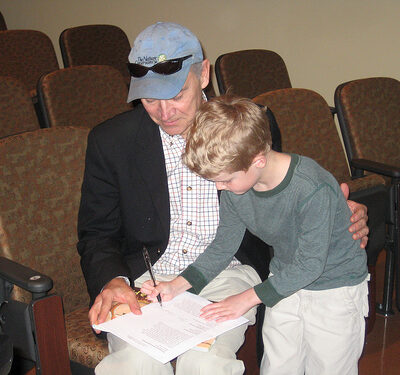
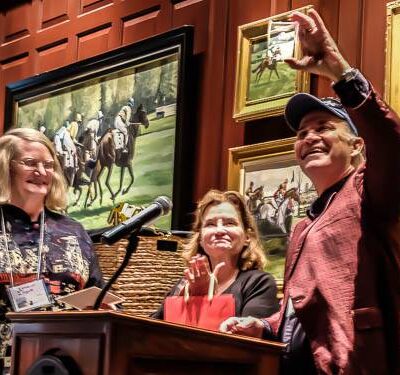
Phil Hoose & Reader at Green Earth Books Award 2009

Phil Hoose & Reader at Green Earth Books Award 2009

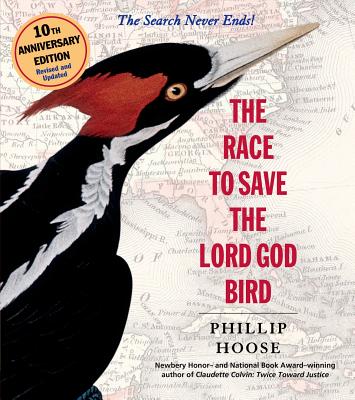
Phillip Hoose has been once again honored with a Green Earth Book Award. The award is the nation’s first environmental stewardship book award for children and young adult books. Over 80 winning and honor books have been honored since 2005 including Hoose’s Hey, Little Ant and The Race to Save the Lord God Bird.

“One of the beauties of the Earth Book Award is that it recognizes an author who’s writing about a topic that is of vital importance to our Earth, yet it’s an area that, until recently, received little attention.” –Pam Spencer Holley, author of the American Library Association’s Quick and Popular Reads for Teens

Congratulations to all the winning and honor books!

Lord God Bird Named “Exemplar” in Common Core

racetosaveThe upcoming Common Core standards have created a healthy debate amongst educators about the role of non-fiction in the classroom.  The Common Core English Language Arts standards, now adopted in 45 states, are calling for elementary students to be reading 50% non-fiction with that percentage building to 70% by the conclusion of high school.

On one side English teachers justifiably fear that the new standards will mean cutting back on fiction, poetry, and drama.  On the other side teachers of all disciplines are welcoming the new attention payed to the renaissance of excellent non-fiction books being produced for children and young adults.  (See the excellent Washington Post article, “Common Core Sparks War Over Words“.)

According to a follow-up  article in the Washington Post, the Common Core authors have come forward with a list of “exemplars” or books and documents that they suggest high school students should be reading.  On the short list was Phillip Hoose’s The Race to Save the Lord God Bird, a book, which like Moonbird,  profiles the ecological uniqueness and fragility of an individual species.

In reviewing The Race to Save the Lord God Bird, the Washington Post said, “There is probably more passion, sadness, villainy, heroism and sheer suspense in this account of the decline of the ivory-billed woodpecker than in any other book, of any genre, destined for young readers…a magnificent book, and not just for kids.”  Perhaps the architects of the new standards and the educators that question those standards can all agree that, regardless of the percentage of fiction versus non-fiction, “magnificent” books should always be used  in the classroom.

Phillip Hoose was honored enough for the book to be called ”magnificent” by the Washington Post, but the Common Core  ”exemplar” status means more readers will be introduced to a bird so magnificent itself, that its name originated from people breathing the words, “Lord God” when they beheld it.

Book Review: ticks, lightning, and stray cats…

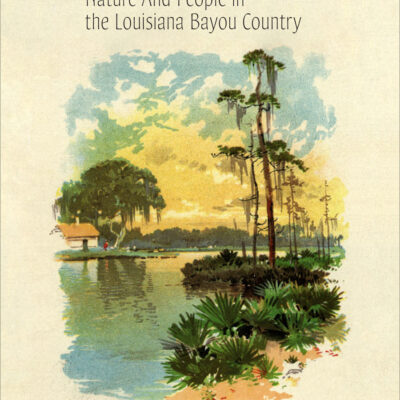
Kelby Ouchley, an author who also has a radio program on Louisiana Public Radio, has just come out with a masterful collection of essays on the natural history of Louisiana, entitled Bayou-Diversity (LSU Press). Even if you’re not from Bayou country, it is worth your attention as a work of literature. Nothing escapes Ouchley’s attention: ticks, lightning, stray cats, oil spills, sluggish water, snakebite myths and remedies, the origin of his great-grandmother’s rocking chair. At the heart is an acute understanding of Louisiana ecology–how it works and should work.

The essays are beautifully written: thermal wind currents are ‘bubbles of air that serve as elevators for raptors.’ In five paragraphs, Ouchley completely changed my understanding of teeth. I haven’t enjoyed or learned so much about the natural history of a place since I read Aldo Leopold’s A Sand County Almanac. –Phillip Hoose